Nepal’s youth are world famous for knowing what they want, and fighting for it.
In the span of just a few days, they overturned their government, demanding more accountability from political authorities. In the past few weeks, the new Prime Minister was sworn in, with resounding cheers heard. It is clear that this generation is asking for something different than the life they are being given.
It’s hard not to consider their expanding awareness of the world, the rigid educational system that they were raised in, and what it might have accidentally taught them about freedom and hope by it’s lack of access to the creative arts.
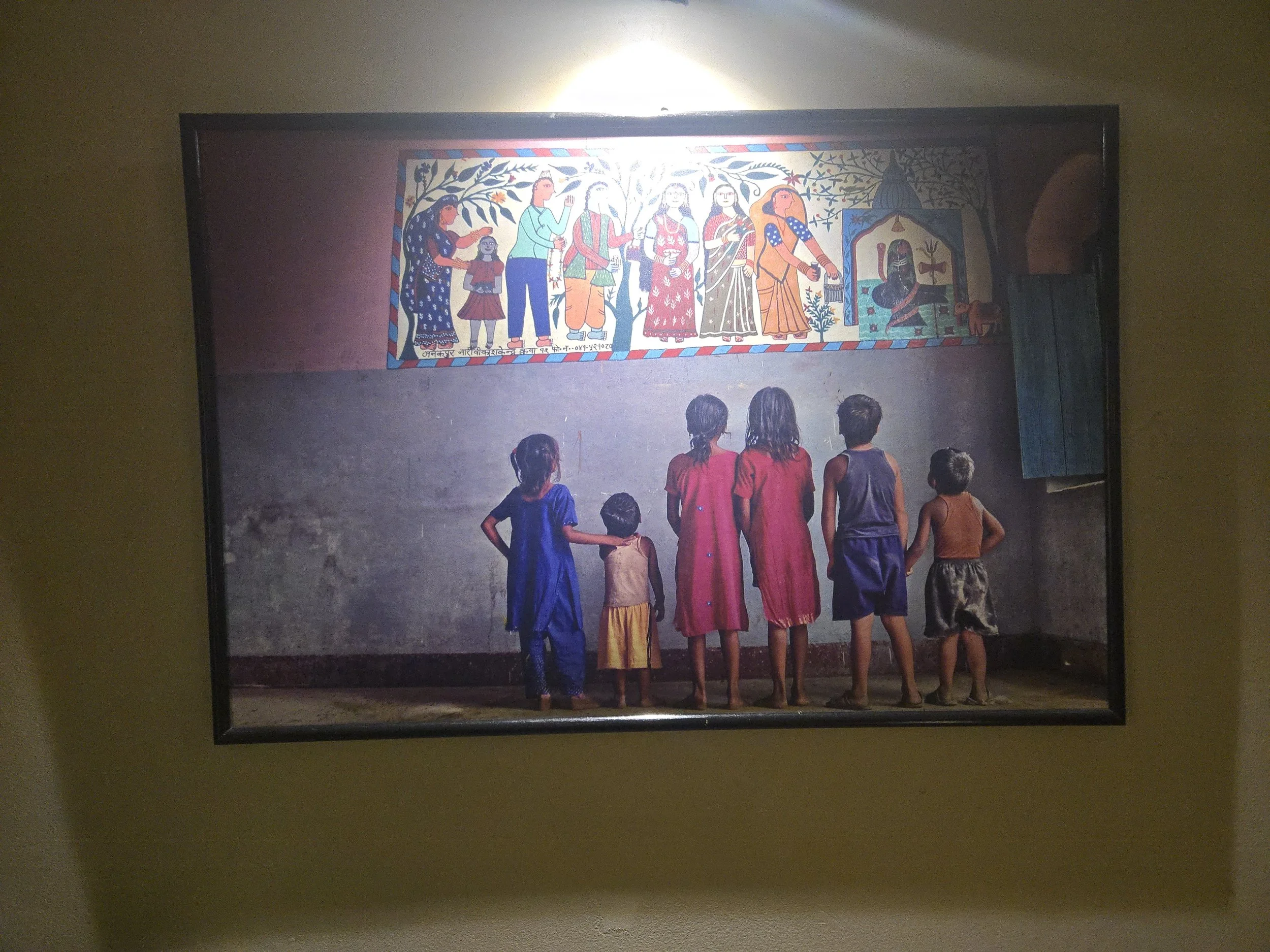
Photograph of Children looking up at Mathila Art, famous in India and Nepal (photographer unknown)
Nepal’s education system seems to be a rigid and orderly institution, with a mandate to instil in kids a work ethic that would make any western workaholic look like a couch potato. In their society, nothing is guaranteed, and this seems to be echoed in their educational journey. Even when working really hard, children can easily fail a grade. Even before getting into school, access to it is really tough. Uniforms, books, and stationary are extremely expensive — for low income families, costs are exorbitant, and at times, unaffordable. School is serious business all the way from preschool, through their final grade of primary school, and beyond, for those fortunate enough to have been able to stay in the system without having had to drop out and support their family. The message seems to be something like: “work as hard as you can, even if later on, you probably will not be able to find a job that will pay a living wage.” In a system like this, where does creativity fit?
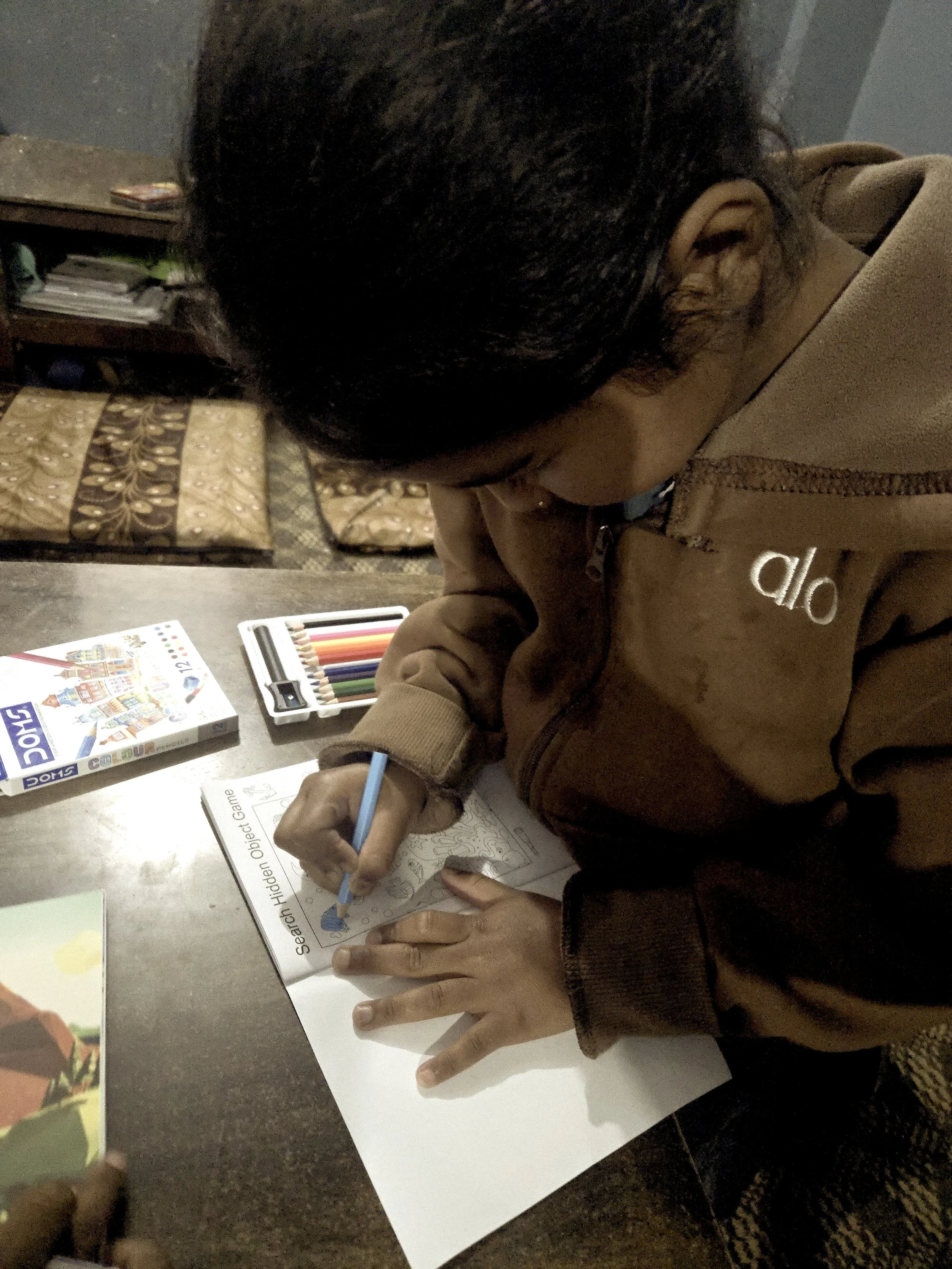
Child at Bandipur Children’s Home Enjoying a Seek and Find coloring book.
I work closely with kids in the school system with Nepal Children’s Foundation, so I know how hard they work. I see the pressure they face. In their early morning they wake up to study. They go to school, come home, and between afternoon chores which for many of the rural based kids, includes agricultural tasks like feeding the buffalo and chickens, and studying, their days are very long. In a week, all Nepalese people including kids, only have one day off. Because there are less automated things available, that one day is often still full with work, such as hand washing clothing. Without access to drinking water free from some kinds of microbes, many kids are doing this while also battling stomach, and other health issues that are easily preventable for those of us in the western world.
In a world like this, it seems like art doesn’t fit anywhere, and in the school system, that is partially true. Creative arts are limited to the youngest ages, and after a while, the joy of colouring, drawing, painting, reading for fun, or learning an instrument in school is not a reality. Choice is not prioritized, perhaps because later in life, powerlessness is so prevalent that even the smallest choice will be eliminated. And creativity stems from the pleasure of being able to choose, even if that choice is as simple as choosing between the colors blue and green.
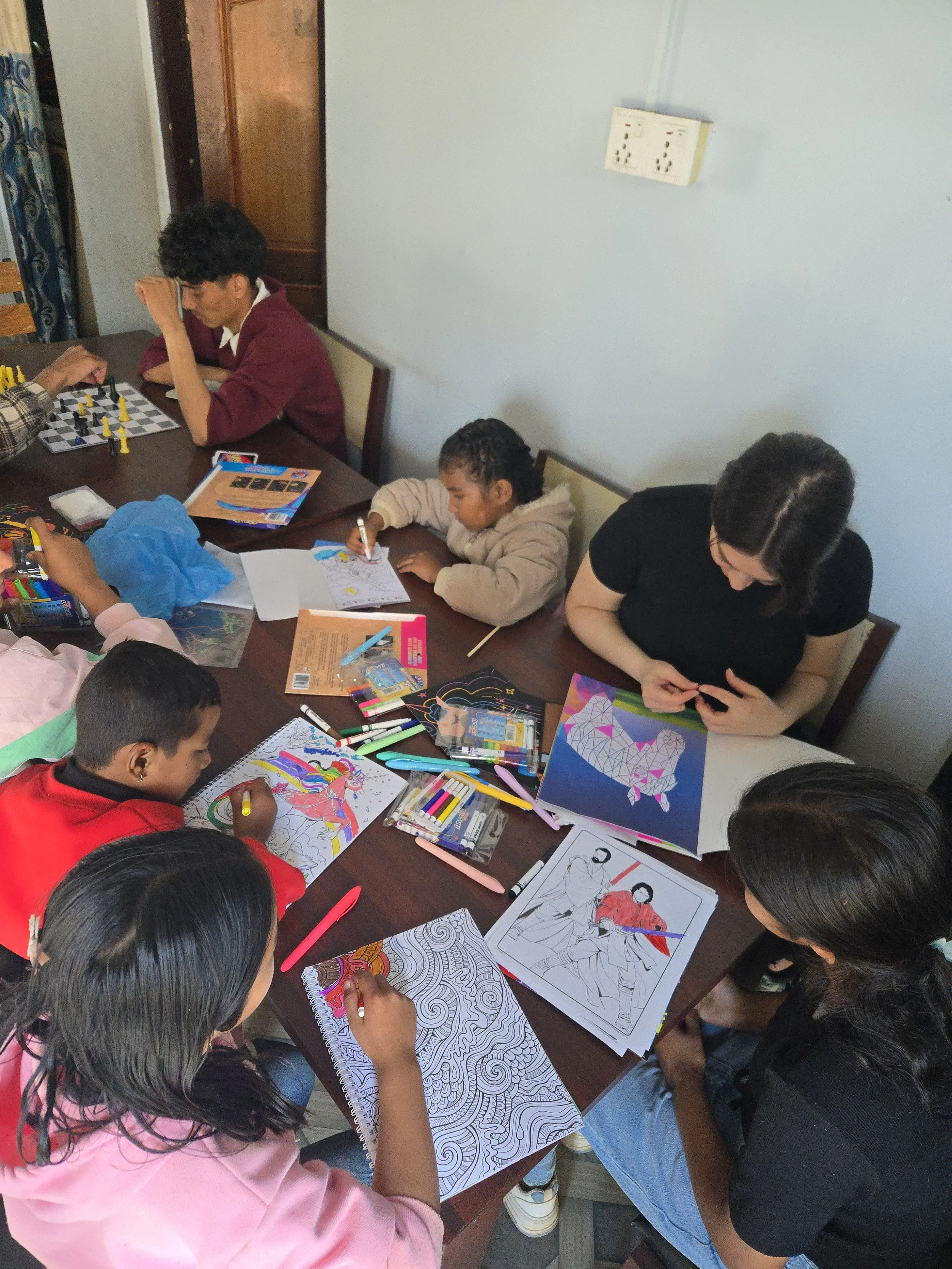
Kids with Nepal Children’s Foundation enjoying an afternoon of play
In Nepal, where so much is at stake, Children are taught to follow orders, not to enjoy options. I can see why a parent or teacher would think, there is no time for creativity in a life like this. And yet, creativity is everywhere in Nepal — from the folk music, to the intricate traditional weavings, to the mix of spices in every cup of Masala Tea. Creativity is an essential heartbeat that can never be far from the human experience, even one with so many barriers to prosperity and security.
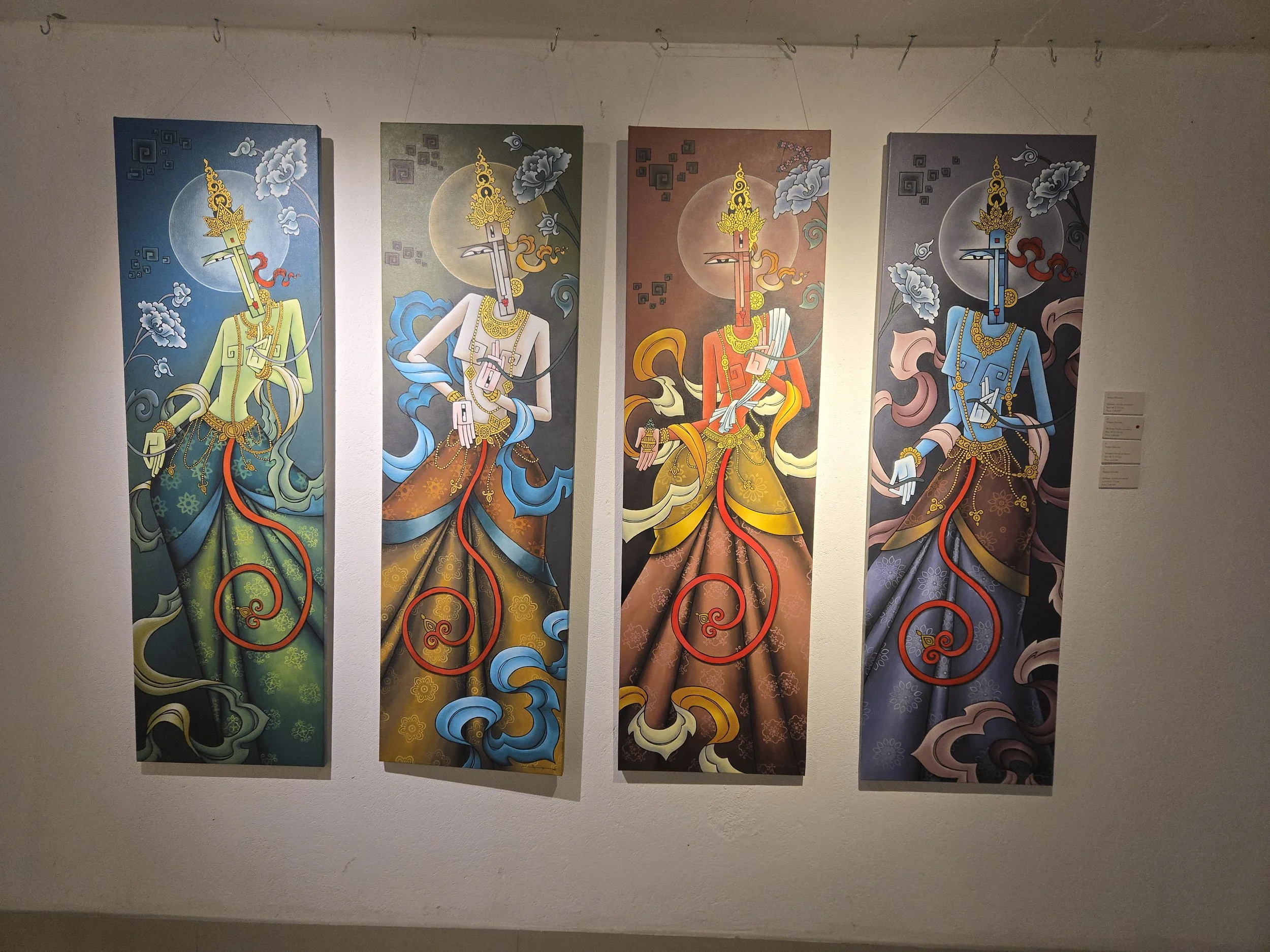
Artwork by Sangee Sharista on display at the Thamel Mall Gallery, March 2026
Even still, Nepal has an emerging contemporary art scene that reflects the resilience of the human spirit. Despite the lack of common access to creative art eduction, the art scene is on the rise, strongly reflecting a decision of Nepal’s youth to live differently. They want something better for their lives, and for some, that includes a creative perspective, embracing the joy of art, and simply being able to choose the life they want.
In my experience working with kids from a medium-sized Nepalese village, they love every chance they can get to be creative. When I was visiting them last week, they pulled me in to their study room with shy smiles, eager to take a break from their exam prep to include me in the drawing and colouring they were doing with the dollar store activity books I brought in my luggage for them, as I’ve been doing for the past few years. The joy of selecting a coloured pencil crayon, saying the name excitedly in both Nepalese and English, learning to view a seek and find page, following a maze, or a dot to dot was all new and exciting for these kids. Even if, in the west, this could seem like just something kids do while waiting for food at a restaurant, in Nepal, these activity books became the medium for great creative expansion for the little minds engaging in a new and exciting process. It was such a profound thing for me to witness, their joy and interest, and growing self confidence when they completed an activity. One little boy in the home broke his arm, and I thought to get him some art supplies as he has limited ability to run and play. In the local town, they don’t have colouring books, so I brought him a blank art sketchbook following the encouragement of a local leader who said the little boy would be very happy with this sketch pad. As one of the older girls got him set up with his sketch pad, she got out a ruler and expertly began to draft a house for him with perfect precision. I could see right away she was giving him something to colour in. He was thrilled with this idea. In the Nepal I’ve experienced, all materials are precious, and even the most simple art materials are no different.
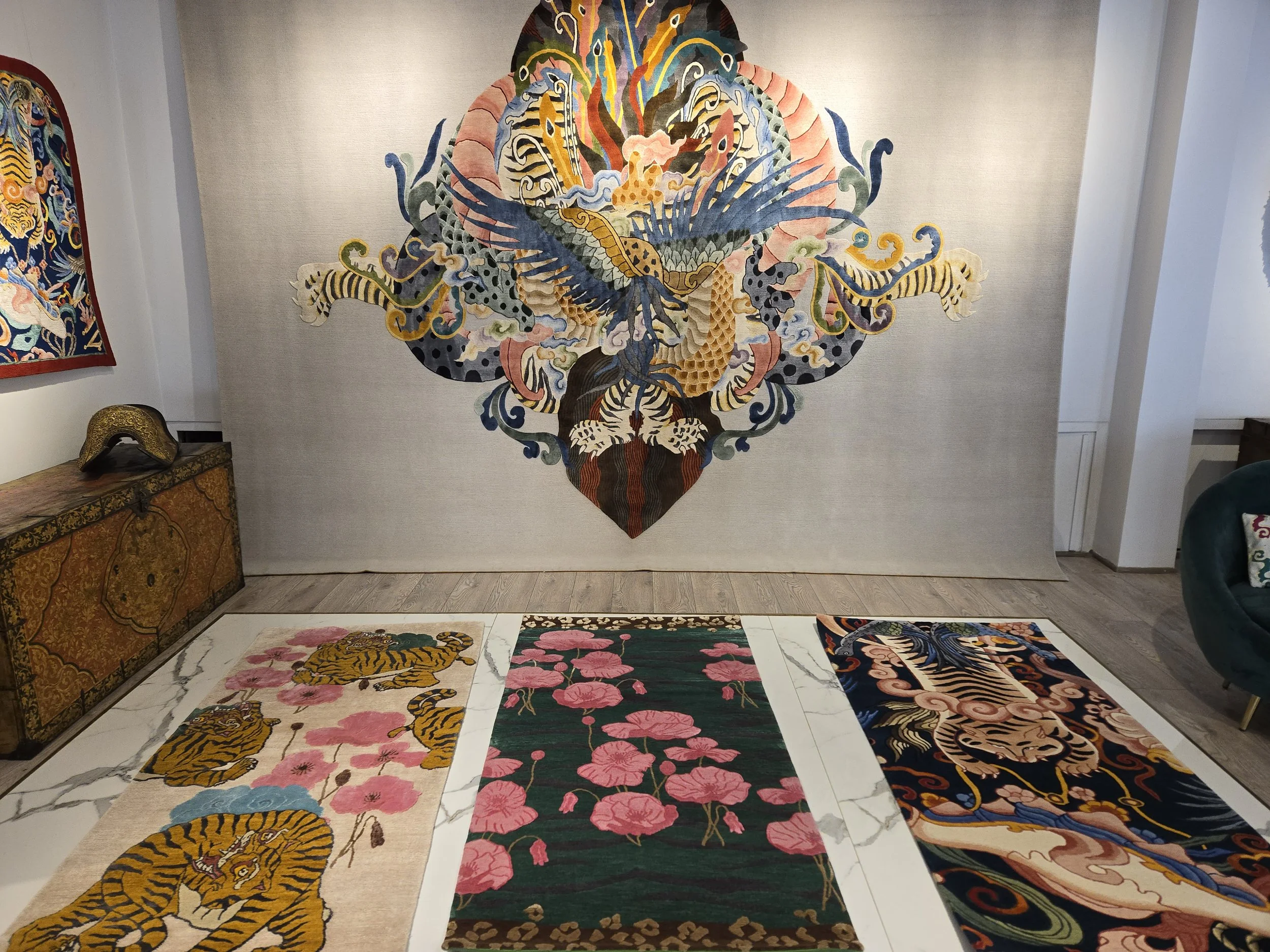
Tibetan weavings are both a traditional art form and a mode for contemporary expression, as seen by these incredible works. (At this time, I can’t find the name of this artist, if someone knows, please tell me!)
The kid’s enjoyment of simple art materials brought me back to my own childhood moments spending hours kneeling at the coffee table, drawing everything I could think of. I loved to draw families, houses, and my sister and I made up whole photo albums for the families we made up, all the way from wedding photos, eventually moving through time, drawing the grandchildren of the same couples. Looking back, I know we were expanding our horizons through this simple act of choosing the life experiences of our fictional characters.
Kids in Nepal have barriers I could have never imagined growing up. So many pressures and demands are on their little shoulders. The adults in their world — their parents and teachers want so much for their future too, and so they are told to work hard — work very hard, every day. When a small sliver of creative play is savoured, it is savoured with glee.
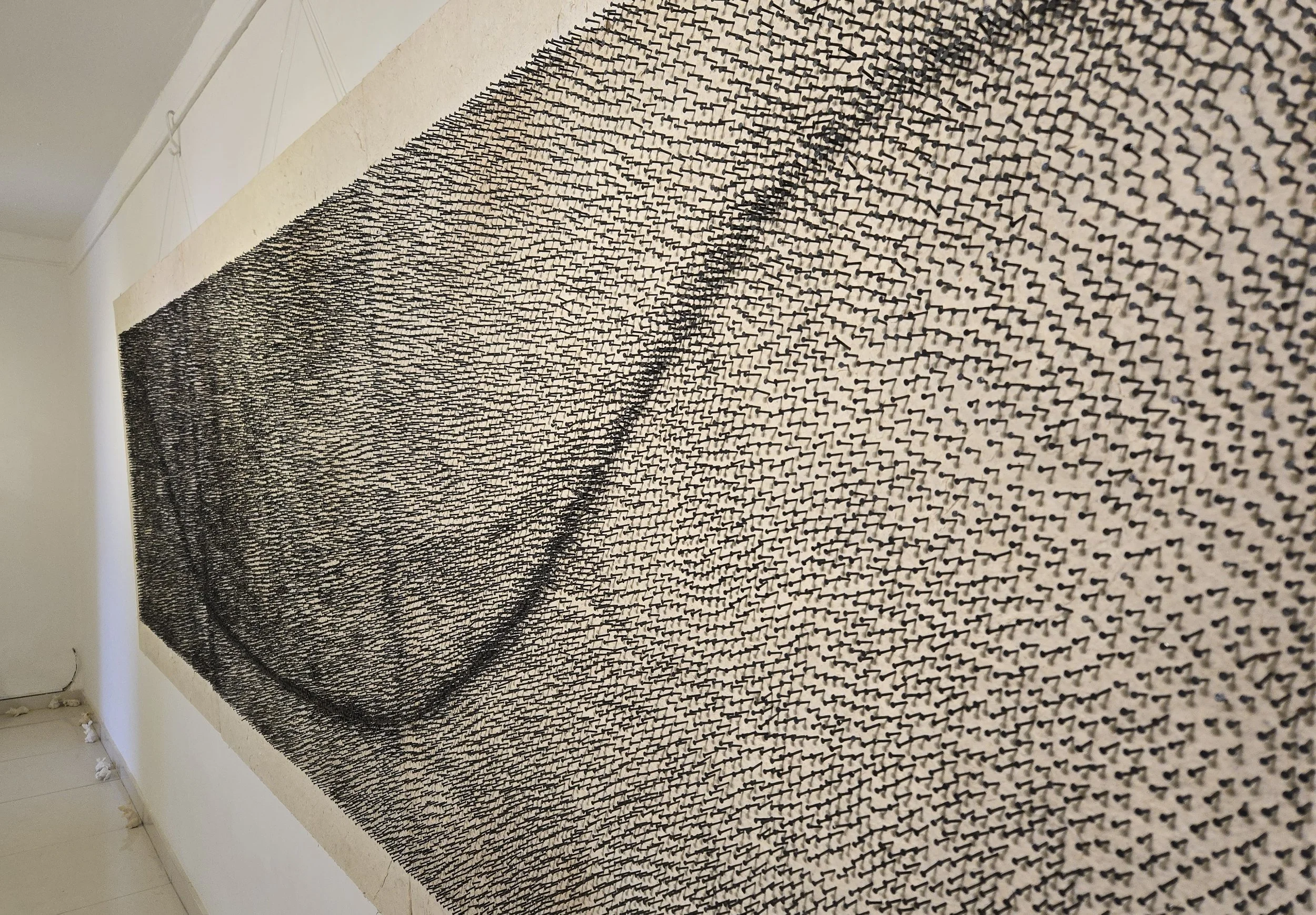
“Status Quo” Samridh Mukhiya and KC Subesh 2024 as seen at the Gallery in Babarmahal Revisited, Kathmandu, in 2025
I am currently testing a creative connection plan between the kids at the Bandipur Children’s Home, and the Canadian board members, volunteers, and donors who support the work. I am working with the local children’s tutor with a plan that will have the benefit of sparking some creative joy, as well as getting kids who are interested to share more about themselves and their worldview through art. It’s just a small step, but we are excited to see where it will lead. Given that when the kids have time off from school and homework, they seem to live to draw and colour as much as I did as a kid, I think we make a great team!
I think at the end of the day, art is being able to have a voice. Being able to engage in individual expression is telling the world that each person has unique preferences and individual tastes. I believe that starts with having the time and wherewithal to express a preference— something so simple that we in the west don’t often recognize that for some, it is considered a luxury.
I often say that helping this Children’s home is my greatest work of art, and I can’t wait to see what will develop and unfold as time goes on. The youth of Nepal know they deserve better things for their lives. They deserve to have a great life as they put in hard hours learning and growing. They deserve to live in a country free from corruption. They deserve opportunities to expand creatively and develop their understanding on philosophical levels. To some, it may seem wild to think that all of that can start with picking up a pencil crayon and having the freedom to choose between colouring a balloon green or blue, but really, that’s where it can all begin— with the simple ability to express a preference.
Here are some incredible artists and thinkers in Nepal who are leading the way to help develop the creative arts in Nepal, as well as some art initiatives and institutions that are helping to contribute to Nepal’s art scene.
Galleries such as the one in Babarmahal Revisited and Thamel Mall
To learn more about what we do at Nepal Children’s Foundation, sign up for our newsletter (scroll to the very bottom of our webpage).
Next time I go to Nepal, if you want to contribute some art materials, let me know :)